Panayot Volov House-Museum

The apostle's childhood home in Shumen – a museum since 1966

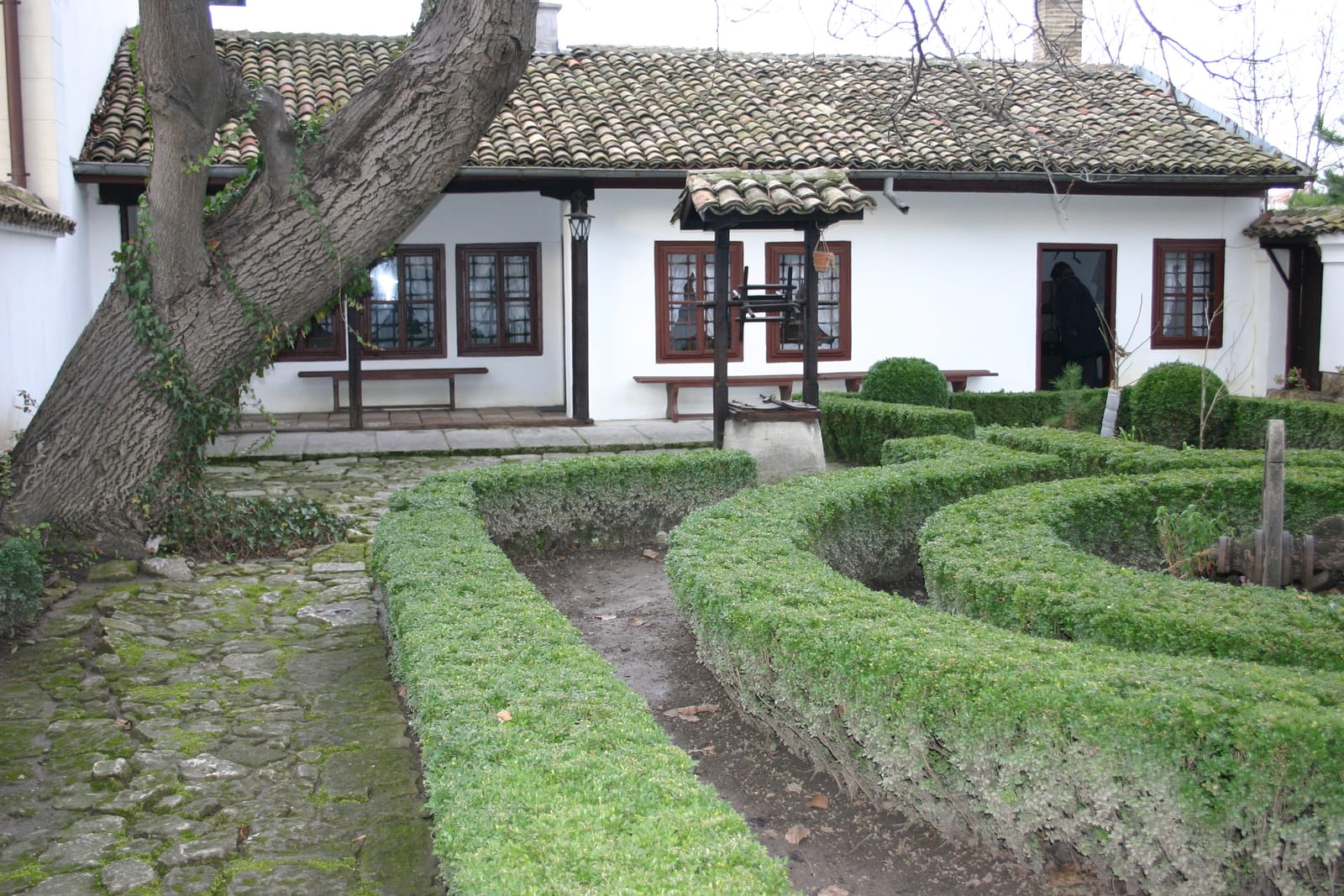
Panayot Volov's birthplace, the ancient walnut and the boxwood parterre in the courtyard

“In this home grew up Panayot Volov – organiser and leader of the April Uprising”

The inscription on the marble plaque at 16 Tsar Osvoboditel Street, Shumen
Built
End of the 18th century – the oldest surviving house in Shumen
Turned into a museum
1966
Exhibition hall
Opened in 1976, for the centenary of the April Uprising
Status
A site of the Regional Historical Museum – Shumen

Some houses are more than walls. This is one of them.

The old wooden gate at 16 Tsar Osvoboditel Street in Shumen opens wide, and at the far end of the yard, in the shade of an ancient walnut tree, stands a beautiful National Revival house. Among the dense boxwood and ivy, spring water murmurs quietly from the large stone fountain. The nearly two-hundred-year-old walnut and the well in front of the veranda are the same witnesses to the boisterous childhood and thoughtful youth of the Shumen hero.

It was here that the young Panayot Volov’s bright dreams and bold revolutionary plans took shape. More than once, secret committee meetings were held on this spot.

The story of the house

The family of Vicho and Vasilka Volov first lived in a handsome two-storey house on the saddlers’ market street, today’s Slavyanski Boulevard. Their first two children, Stefania and Panayot, were born there. In the 1860s the master shoemaker Vicho Volov was among the dozens of ruined Shumen craftsmen, and this forced the family to move to the poorer Choban quarter, at the very edge of town.

The house dates from the end of the 18th century and is the oldest surviving building in Shumen. It became a museum in 1966, and in 1976, for the centenary of the April Uprising, an exhibition hall was built beside it.

The domestic exhibition

The complex consists of the domestic exhibition inside the house – Kashti (living room), Peshti (kitchen) and Soba (bedroom) – and a separate exhibition hall. Original objects recreate the setting in which Volov spent his childhood and youth. Everything is arranged as it stood 150 years ago.

The exhibition hall

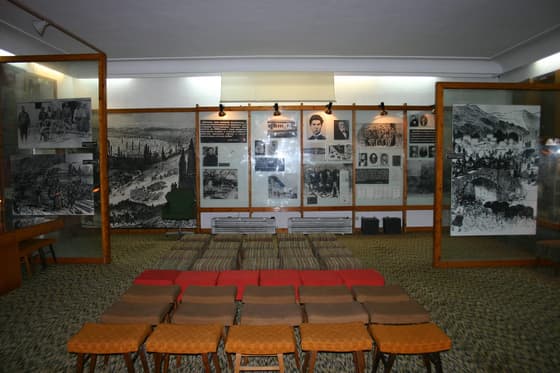
The heart of the museum’s display is Volov’s role as chief apostle of the IV Revolutionary District and his tireless work preparing and leading the April Uprising. Views of the towns and villages of the revolt, portraits of the April heroes, documents and precious relics are shown in dedicated cases.

The exhibition also covers his years of study – at the Dolnomahlensko school under Iliya R. Blaskov, at the Mutual and the Boys’ secondary schools under Todor Ikonomov and Dobri Voynikov, and later in Nikolaev, Russia. Among the most revealing sources for the young man’s developing ideology are the letters he wrote to his uncle Marincho Benli and to the voivode Panayot Hitov.

Museum education

The memorial complex has long been a place of museum education. The work with preschool teachers has been most fruitful in the theme of “Traditions and Holidays”: in a museum setting, children encounter the meaning, elements and symbols of Christmas, Lazarus Saturday, Palm Sunday, Easter and Enyovden, and interpret them creatively.

Here they also discover “The life of the old Bulgarians” – an authentic National Revival interior, folklore and folk applied art. The workshop on the Shumen folk costume draws particular interest, as children work with stencilling and decorative appliqué.

The most effective formats have proved to be the open “lessons in patriotism”, the quizzes, the commemorations and the multimedia lesson “Patriotic Bulgarians”.

Partners

The museum works with the Local History Society, the Military Club, the Garrison Museum, the reading rooms across the region, the Regional Library, the Traditsiya regional club and the Krum Strashniy patriotic committee, founded at the house-museum itself, as well as with departments of the Shumen Regional Administration and the Culture, Education and Youth Directorate of Shumen Municipality.

The joint museum–school–reading room programmes have been especially productive. In this way the Panayot Volov House-Museum fulfils its most important purpose: to educate and raise the culture of its visitors by introducing them to the values held in the rich cultural and historical heritage of the Shumen region.
The rooms of the house

Kashti

Kashti

The living room

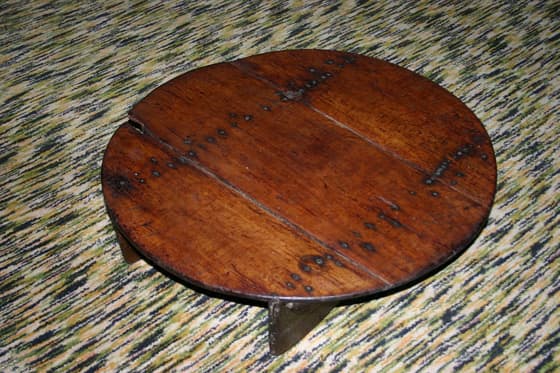
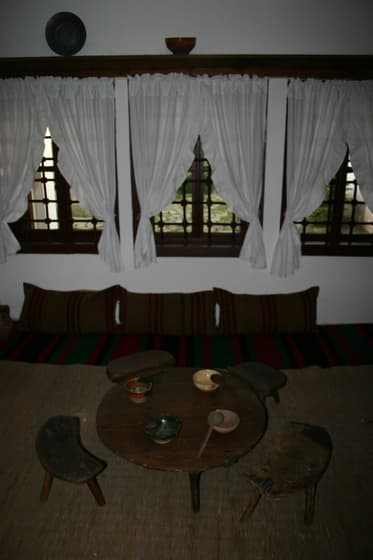
The first room of the domestic exhibition. Copper dishes, pots and bowls rest on the shelves, and in the middle stands the low round table with its small three-legged stools – exactly as it was more than 150 years ago.

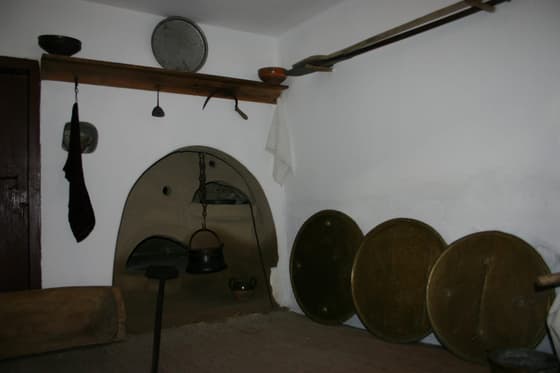
Peshti

Peshti

The kitchen

Here his mother Vasilka and her daughters baked the bread and prepared the meals and winter stores for the large Volov family.

Soba

Soba

The bedroom

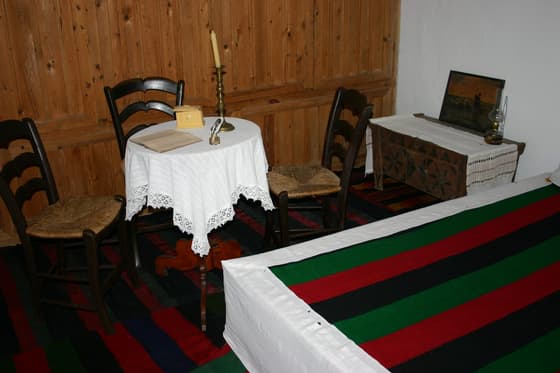
Woven rugs, cushions and snow-white homespun linen cover the room. It also holds Panayot Volov's working corner – the place where his reading, his writing and his thoughts of freedom took shape.

Exhibition hall

Exhibition hall

Opened in 1976

A purpose-built hall whose white facade carries the original panel Apriltsi. Inside, objects, documents and photographs tell the story of Volov's life, with the April Uprising at its centre.

The relics

  • Volov's rifle
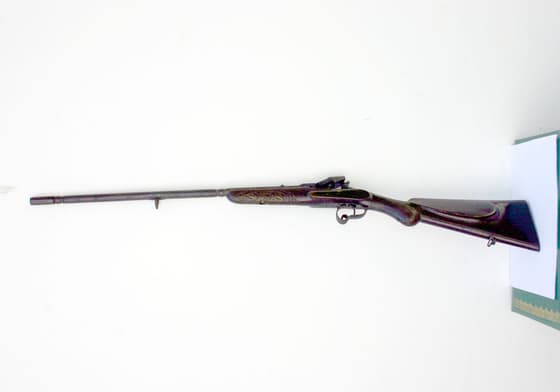
    Volov's rifle The weapon with which, on 20 April 1876, the apostle gave the signal that the uprising had begun.
  • Volov's working corner
    Volov's working corner His candlestick, his inkwell and the fine porcelain box – preserved as he left them.
  • The Captain's Daughter by Alexander Pushkin Volov's favourite book, still on his writing table.
  • The table of Gani Madzharetsa of Karlovo
    The table of Gani Madzharetsa of Karlovo Used more than once by Volov, and earlier by Vasil Levski himself.
  • The objects of the revolutionary oath
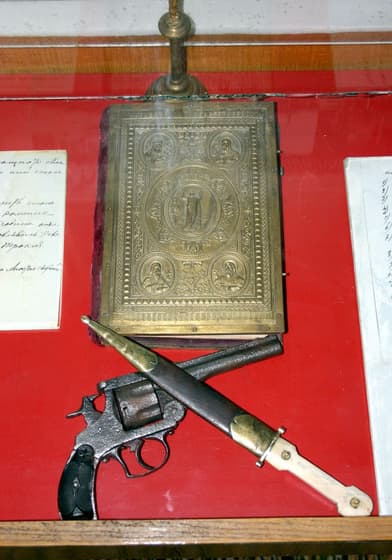
    The objects of the revolutionary oath A cross, a revolver, a dagger and a gospel – the objects on which the insurgents swore their oath to the cause of freedom.
  • The 1874 letters of the Ruse committee
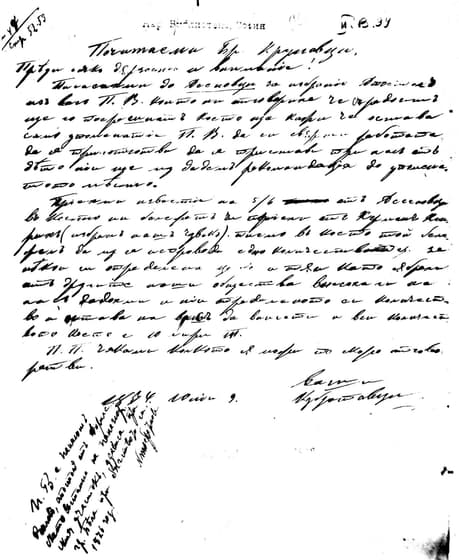
    The 1874 letters of the Ruse committee The correspondence between the Ruse committee (the Kubratovtsi) and the Shumen committee (the Krumovtsi), documenting Volov's election as the new Apostle, successor to Vasil Levski.
  • Minutes of the Archangel Michael reading room Evidence of Volov's work as deputy chairman of the first reading room in Shumen, and as an actor and director in the theatrical performances that stirred the town.

The annual calendar of remembrance

Dates the museum marks every year together with the schools, reading rooms and patriotic clubs of Shumen.

  1. 6 January An evening of Hristo Botev's poetry, marking the birth of the poet-revolutionary.
  2. 19 February The anniversary of Vasil Levski's death – ceremonies and an exhibition at the museum.
  3. 3 March Bulgaria's national holiday – Liberation Day.
  4. 20 April The anniversary of the outbreak of the April Uprising.
  5. 1 June Creative exhibitions by children from Shumen in the museum courtyard.
  6. 7 June Volov Day – the anniversary of the apostle's death in the Yantra River (New Style).
  7. 24 June Enyovden – the traditional midsummer folk festival, held in the courtyard.
  8. 1 November Day of the National Awakeners – the multimedia lesson Patriotic Bulgarians.
  9. 6 December Donor's Day at the Panayot Volov House-Museum.
  10. 17 December From Ignazhden to Christmas – a re-enactment of traditional winter rituals.

Visiting

Address
16 Tsar Osvoboditel Street, Shumen 9700, Bulgaria
Show on map
Opening hours
April – October: 9:00 – 17:00. Closed Saturday and Sunday. Weekend and Monday visits by prior arrangement.
Curator
Chief Assist. Prof. Dr. Milena Georgieva
✦ This site does not use cookies for tracking or marketing. We do not collect personal data. GDPR compliant.